Sculpture as Architecture: Two Works at Casa Continuum
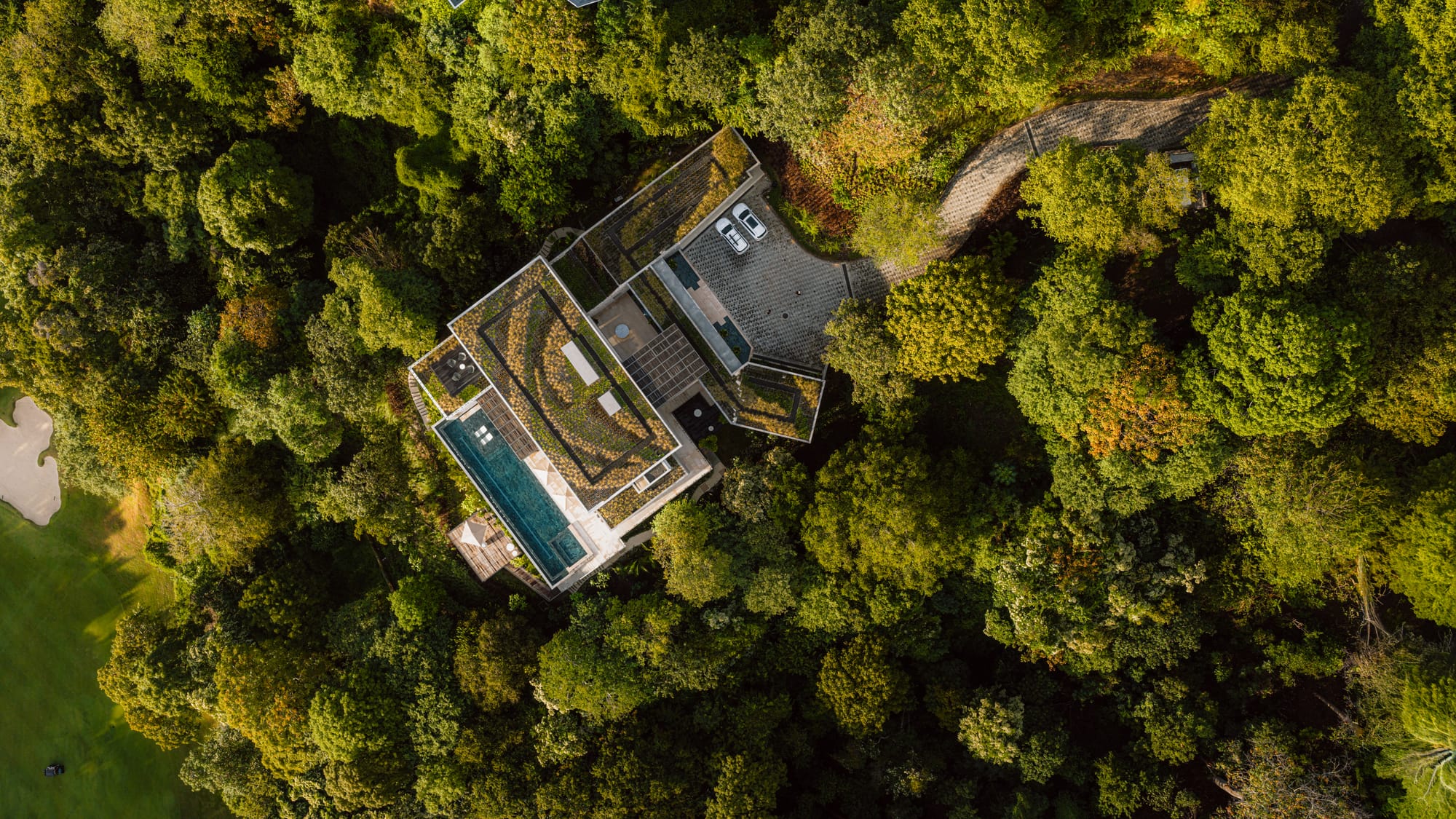
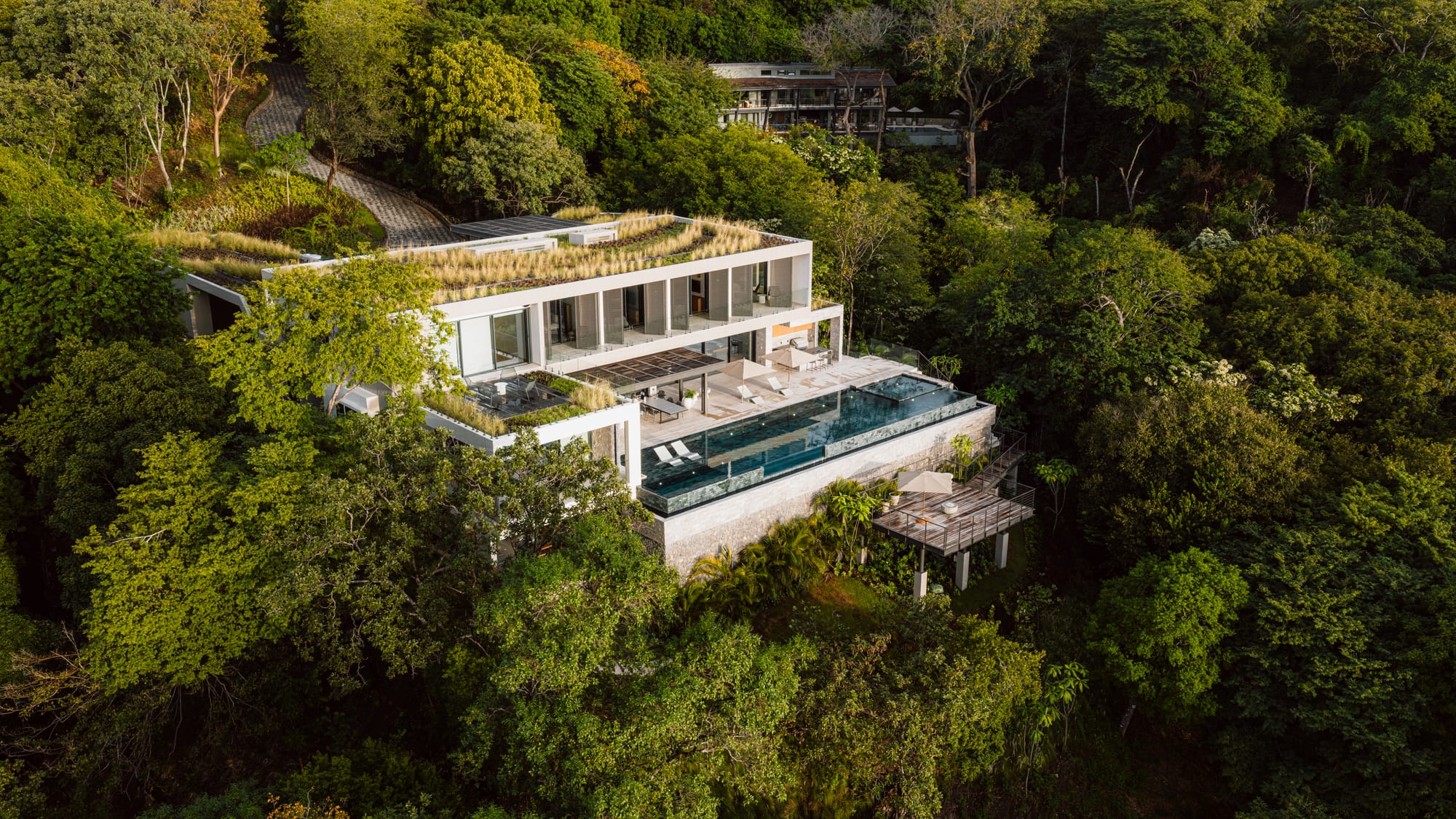
At Casa Continuum, architecture was never intended to end at walls, roofs, or materials. From the outset, the project was conceived as a continuous spatial sequence—interior and exterior, solid and void, movement and pause. Within that framework, the inclusion of sculpture felt less like decoration and more like a natural extension of the architecture itself.
Two commissioned works now anchor the house, each occupying a distinct spatial and conceptual role. Importantly, both sculptures were placed on site by the artists themselves, each arriving with their teams to carefully position the works in direct dialogue with the architecture and landscape.
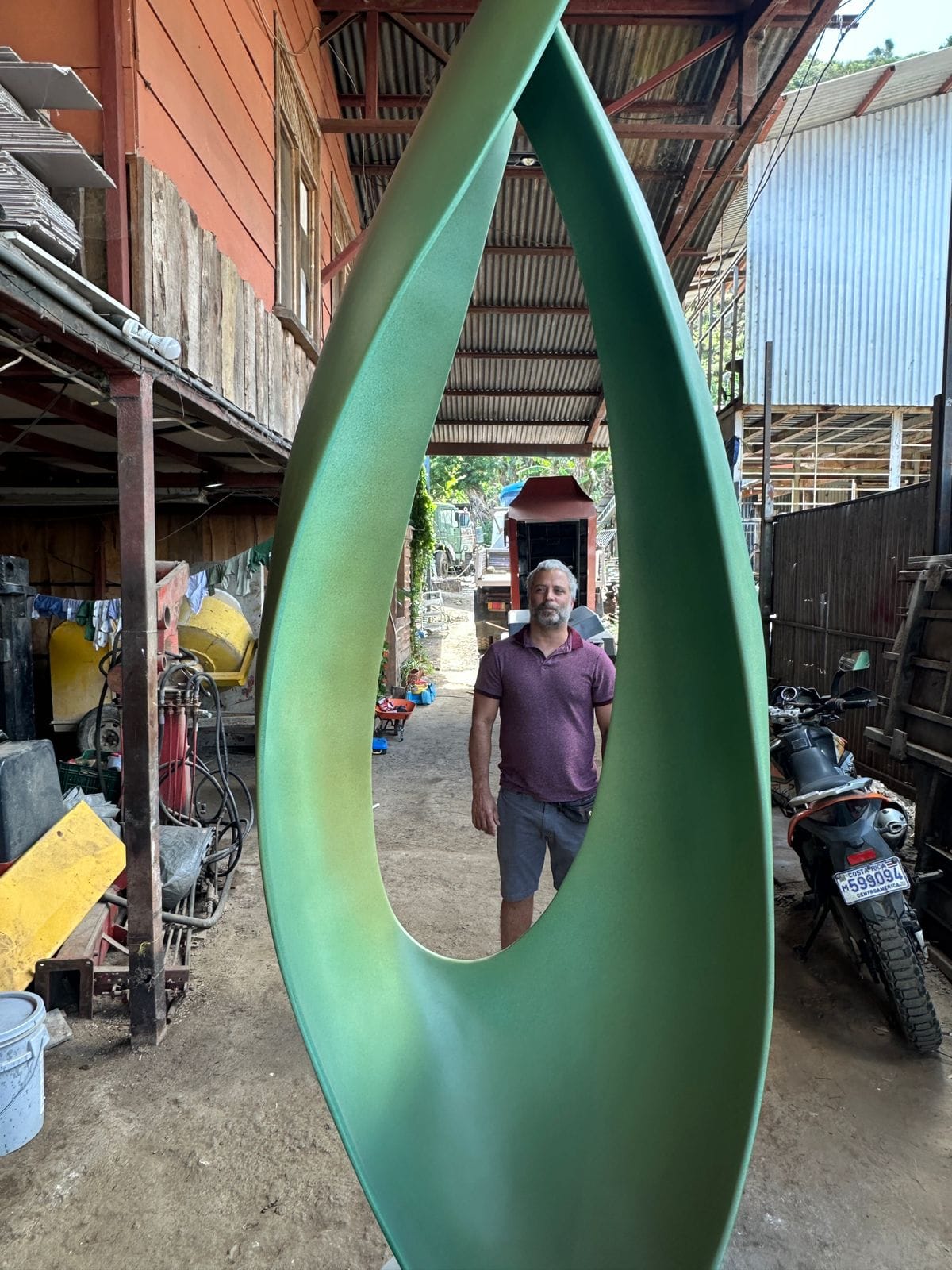
Entry Sculpture — Francesco Bracci
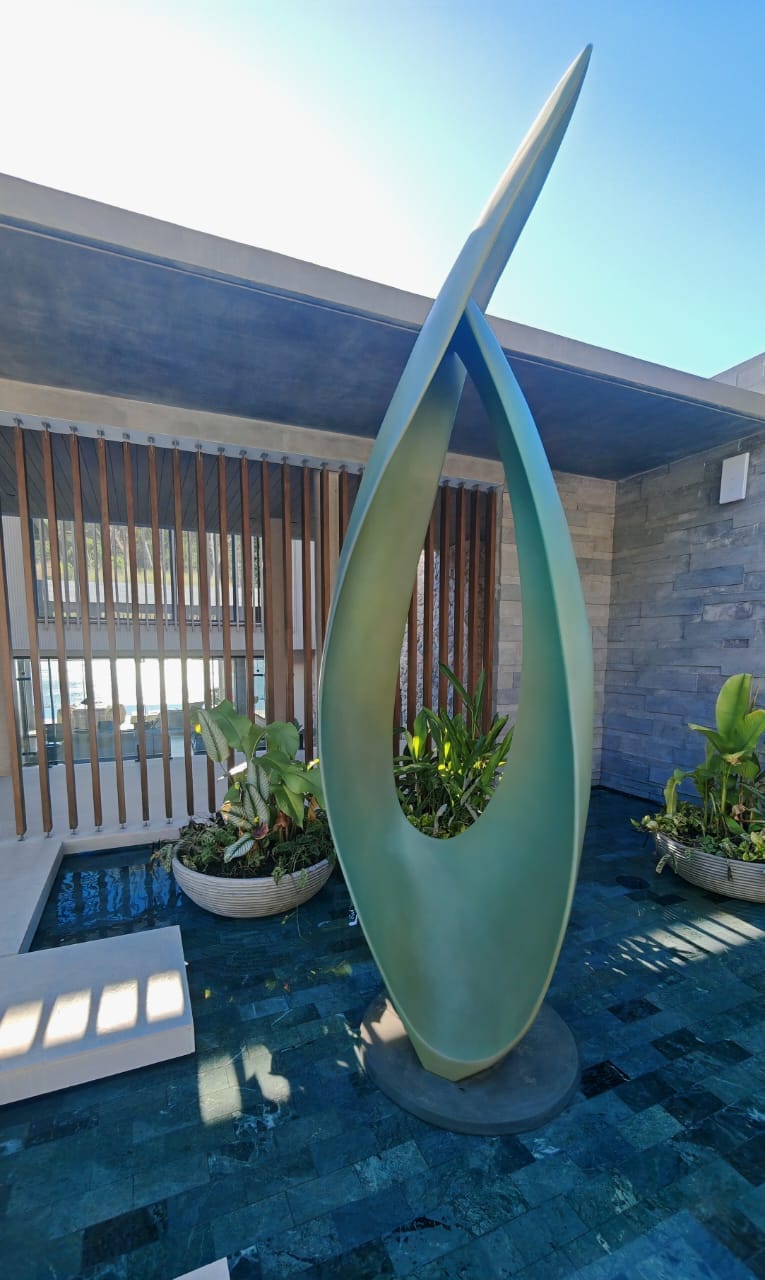
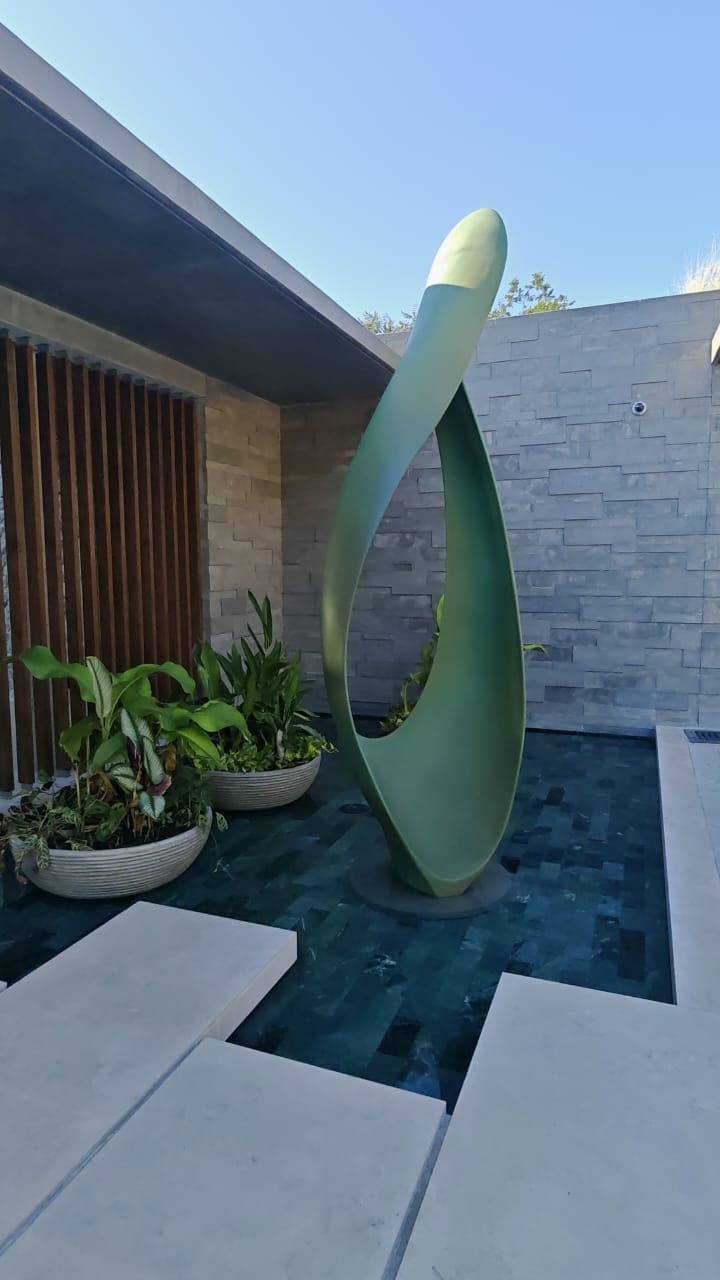
At the threshold of the house, rising from the reflecting pool at the entry, stands a contrasting presence: a ferrocement sculpture by Francesco Bracci, over three meters tall.
Where Mobius speaks of continuity and inward reflection, this piece speaks of emergence. Its abstracted vertical form suggests growth, tension, and upward movement—qualities deeply tied to Costa Rica’s landscape and vegetation. The sculpture appears to rise simultaneously from water and ground, blurring the boundary between built form and natural process.
Bracci and his team installed the piece directly on site, adjusting its position within the reflecting pool to refine its relationship to water, reflection, and the arrival sequence. The ferrocement surface catches light differently throughout the day, while its mirrored image doubles the perceived height and reinforces the sense of something still in the act of becoming.
Mobius — Ingrid Rudelman
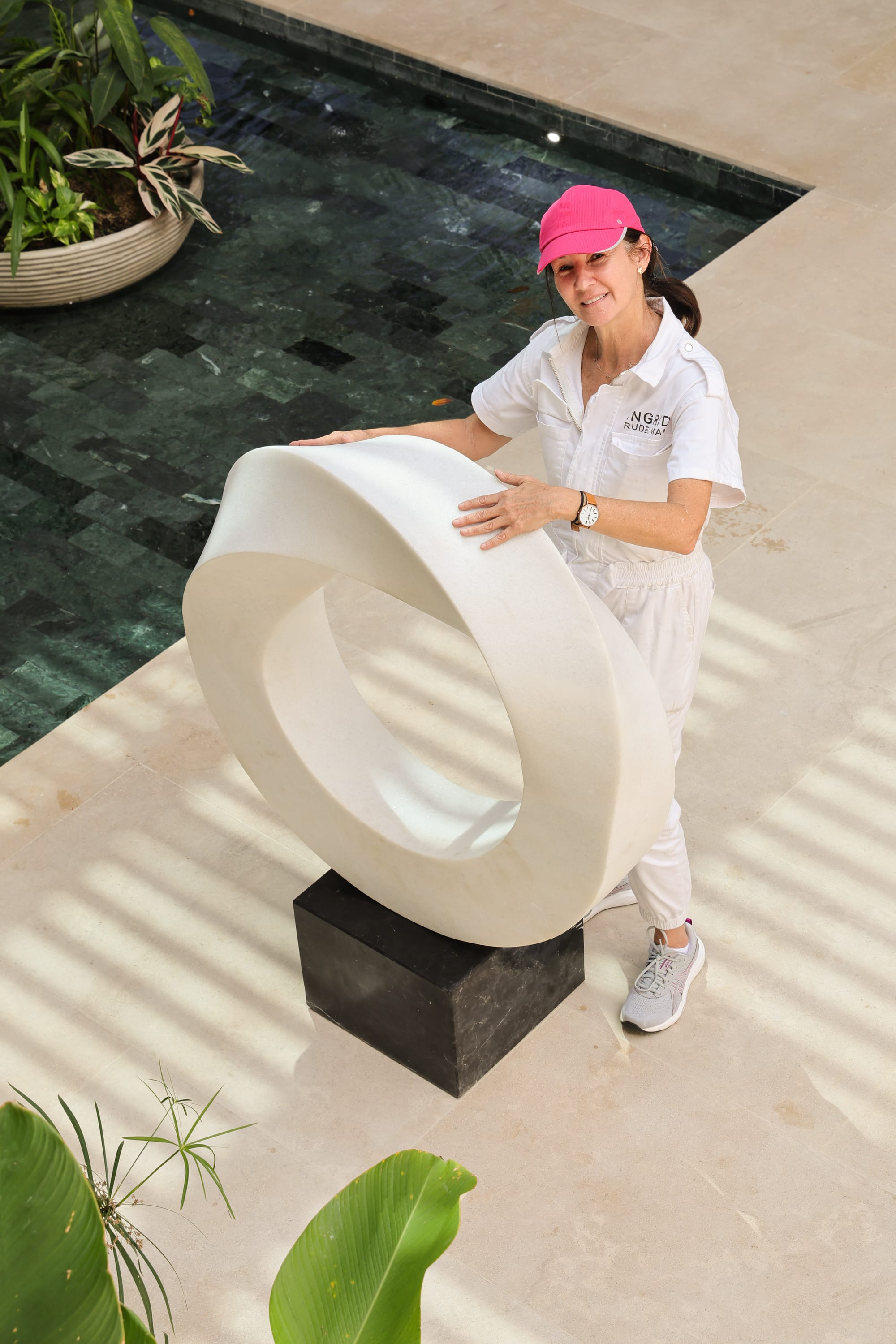
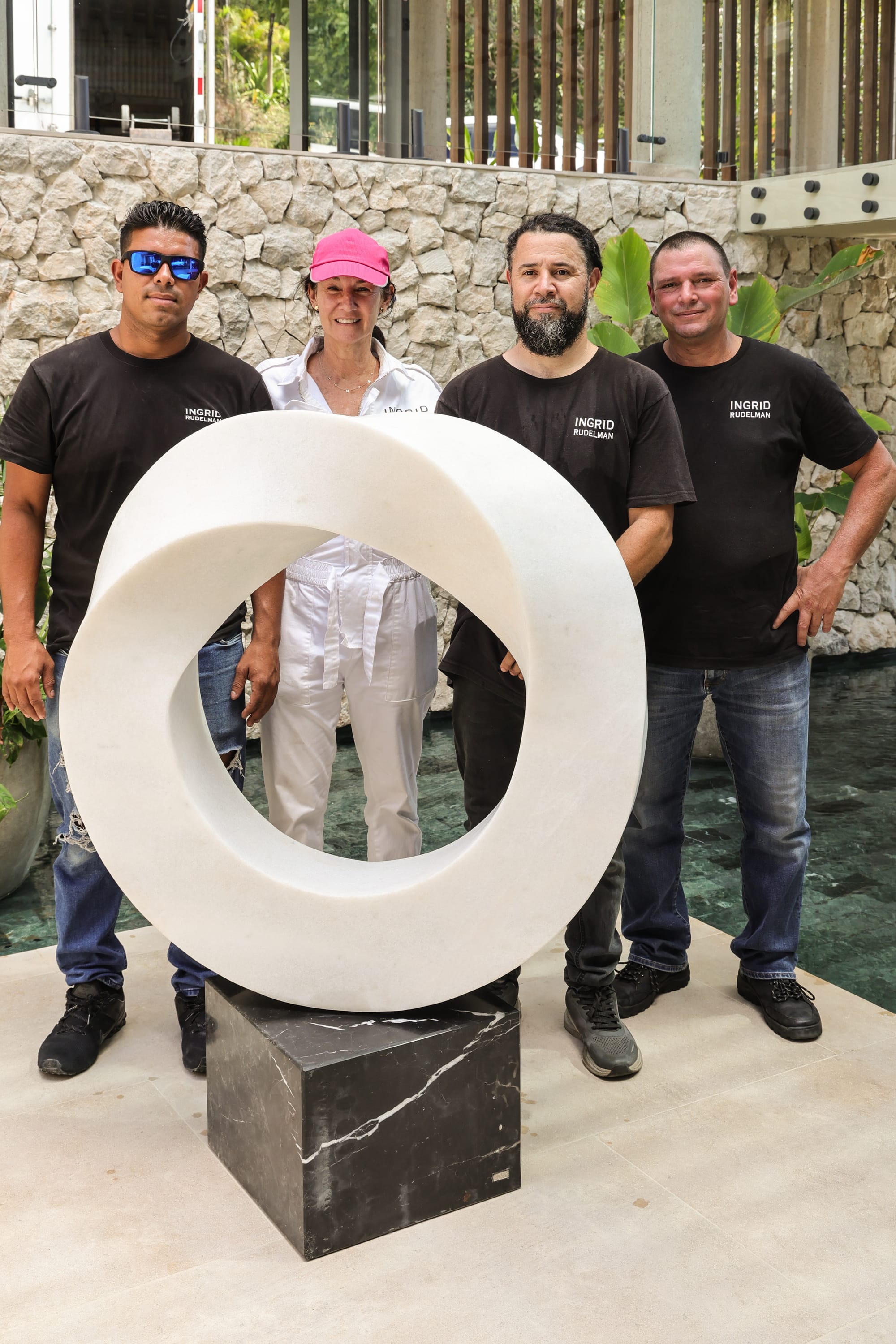
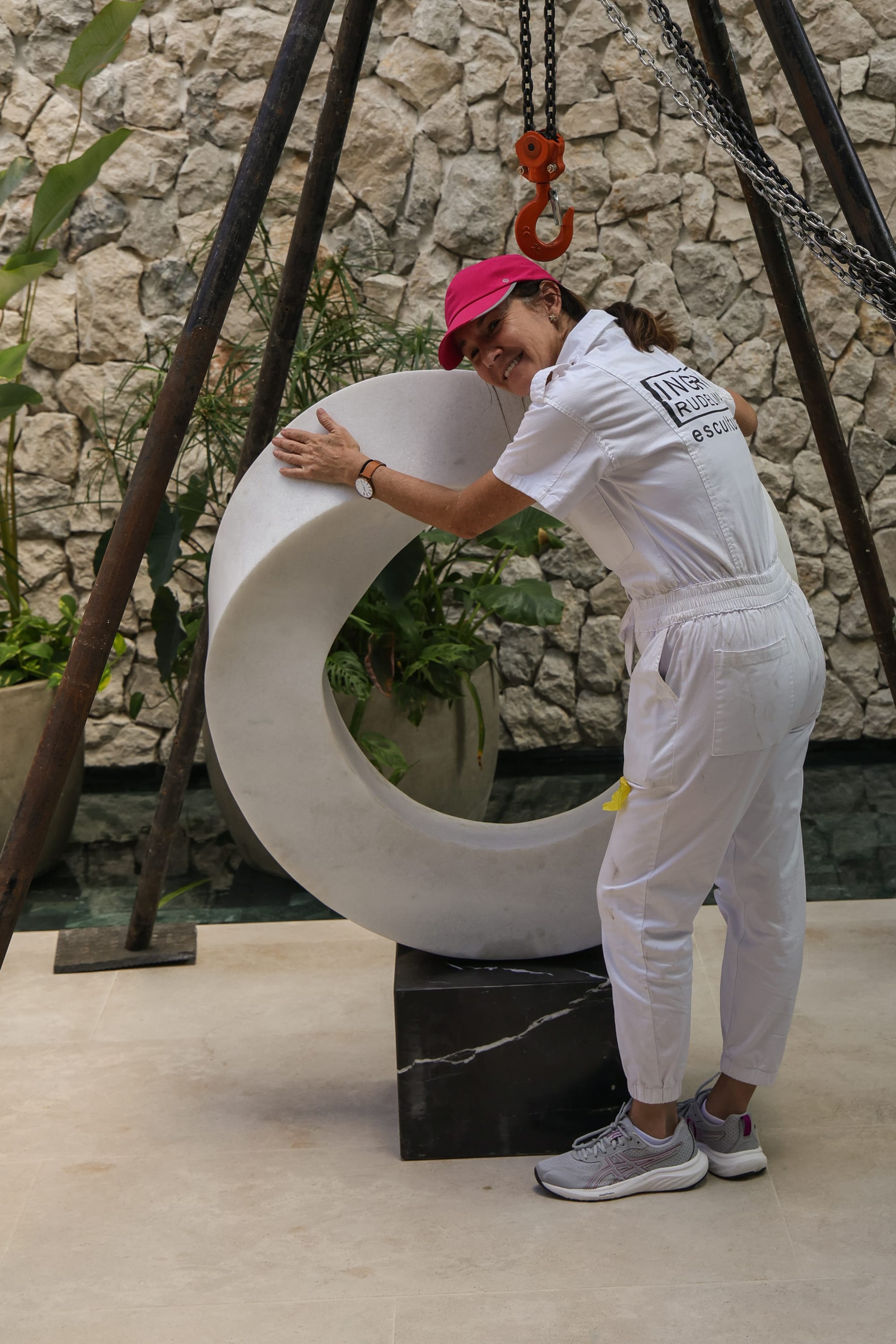
At the center of the home, within the main courtyard, sits Mobius, a carved marble sculpture by Ingrid Rudelman. The piece reads as a continuous loop—evoking the logic of a Möbius strip or Klein bottle—where inside and outside collapse into a single, uninterrupted surface.
Carved from solid marble, the sculpture carries an inherent tension: infinite continuity expressed through a heavy, finite material. As light shifts across the courtyard throughout the day, the surface reveals subtle variations, reinforcing the idea of time not as a sequence of moments, but as a continuous flow.
Rudelman personally worked with her team on site to place the sculpture precisely within the courtyard, calibrating its orientation, scale, and relationship to light, circulation, and surrounding surfaces. Positioned at the heart of the house, Mobius becomes a quiet organizer of space. Movement, views, and daily rituals orbit it naturally. It is not an object to be passed by, but one to be repeatedly encountered—each time slightly differently.
Architecture Beyond the Building
Together, these two works extend the architectural narrative of Casa Continuum. They are not additions, but participants—structuring experience, marking moments of pause, and deepening the relationship between space, movement, and meaning.
For us, commissioning art is not about filling space. It is about slowing it down, giving form to ideas that architecture alone cannot fully express.
Question for readers:
Have you experienced a space where the presence and placement of art fundamentally changed how you moved through or understood the architecture?